Janesville Epoxy Flooring installs industrial epoxy flooring in Janesville, WI, serving surrounding cities including Milton, Edgerton, Beloit, South Beloit and Evansville. Over more than 20 years, we have coated manufacturing, warehouse, food processing and maintenance floors where oil, coolant, forklifts and washdown would destroy a light-duty finish within months. Industrial floors have to be built for the abuse they actually face, and that starts with understanding the plant.
We walk the floor with your team, learn what is spilled, dropped and driven across it, and note when the building can stand still. Then we design a system by zone rather than one coating for the whole space. A machining area, a forklift aisle and a washdown room in the same building may each need something different.
Every industrial slab is mechanically prepared, moisture tested and repaired before coating, and every joint that wheels cross is filled. The proposal names the system, the finished thickness and the schedule for each zone, so your maintenance and purchasing teams can check what went down against what was quoted.
Industrial Floors We Build
Manufacturing and Machining Floors
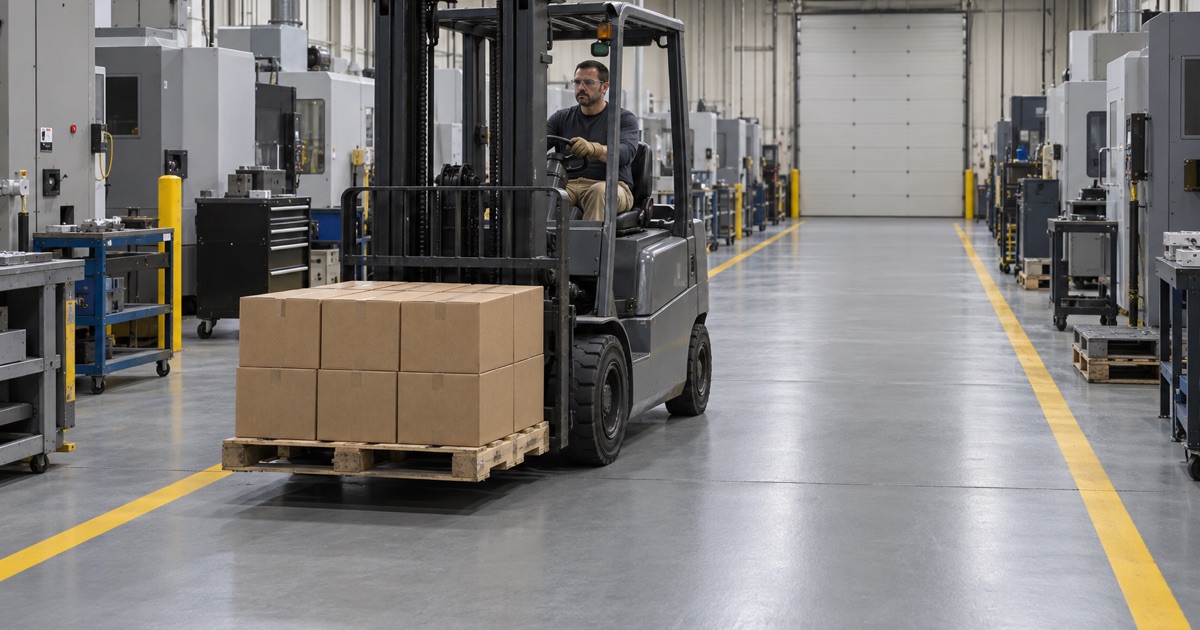
Machining and assembly areas see cutting oils, coolants, hydraulic fluid and metal shavings, along with dropped parts and anchored equipment. We build chemical-resistant systems thick enough to absorb impact and detail them carefully around machine bases and anchor bolts. Oil-soaked concrete is cleaned and degreased before grinding, or the coating will not bond.
Where machines must stay in place, we coat around them and seal the edges cleanly. Where equipment is being moved or replaced, coating the open slab before reinstallation gives the best result.
Warehouse and Distribution Floors
Warehouse floors take constant forklift and pallet jack traffic, which wears through weak coatings in the aisles first. We use abrasion-resistant systems with extra thickness in the traffic lanes and keep aisle and rack lines legible. Dock areas, where salt, water and cold air come in through the doors, get extra texture and durability.
Large open warehouse floors are often prepared with shot blasting for speed and a consistent profile. Edges, columns and rack bases are finished with edge grinders so the coating bonds everywhere.
Food and Beverage Processing Floors
Food plants need floors that can be kept clean, resist food acids and sanitizers, and drain properly. Wisconsin’s food processing plant rules emphasize floors that are cleanable and slope to drains, and we build seamless systems with coved bases that leave no seams for bacteria. We confirm what the plant’s inspector expects before choosing a system.
In rooms with hot washdown, steam cleaning or freezer doors that cause thermal shock, urethane cement is usually the right material. Drier packaging and storage areas can use epoxy systems, which keeps cost in line with need.
Building for Heavy Industrial Use
Thickness and System Build
Industrial floors range from multi-coat roll-applied systems to broadcast systems built in layers and trowel-applied mortars that can take heavy impact. Thicker systems spread loads better, resist gouging and bridge minor slab imperfections. We match the build to the abuse in each zone rather than overbuilding the whole floor.
The finished thickness of each zone is written into the proposal. That number is what lets you hold us to the system you paid for.
Joint Filling and Edge Protection
Plant, shop and warehouse joints are filled with a semirigid filler before any coating goes over them. The filler supports the slab edges so forklift and cart wheels do not chip them, and it keeps the coating from cracking along every joint line. Damaged joint edges are rebuilt first.
Expansion and isolation joints that must move are treated differently, with flexible sealants that allow that movement. Getting this distinction right prevents a large share of industrial floor failures.
Chemical Resistance
Different resins resist different chemicals, and no single coating resists everything. We ask for a list of the oils, solvents, acids, caustics and cleaners used on the floor and how long spills usually sit. That list drives the choice of resin and topcoat.
Where exposure is extreme, such as battery rooms or chemical storage, we specify systems designed for that duty. Secondary containment areas may need their own specialized coating.
Safety and Layout
Slip Resistance by Zone
Industrial floors get wet, oily and dusty, so slip resistance has to be built in. We broadcast quartz or other aggregate into the coating where workers stand at wet or oily stations, and use lighter texture in aisles where carts roll and floors are scrubbed. Matching texture to each zone keeps the floor both safe and cleanable.
We show samples so your safety team can see and feel the options. Texture is easier to get right at installation than to add later.
Line Striping and Safety Marking
Aisle lines, pedestrian walkways, forklift lanes and hazard zones can be striped into the coating system so they wear with the floor rather than peeling like tape. We lay out markings with your team before the topcoat goes on. Colors follow the scheme your facility already uses.
Striping within the coating holds up under scrubbers and forklift traffic. It also keeps the layout readable for years.
Keeping Your Plant Running
Overnight, Weekend and Shutdown Work
Plant, kitchen and shop floors are scheduled around the hours the building has to keep running, including overnight and weekend windows. We phase large floors so production can continue in one area while another is coated, and plan around scheduled shutdowns when they are available. Fast-curing systems shorten each phase.
Dust collection on every grinder keeps nearby equipment and products clean. We coordinate access, ventilation and safety requirements with your team before the first shift.
Compliance and Clean Work
Wisconsin jobs follow the federal 40 CFR 59 Subpart D architectural coatings rule, and Illinois jobs follow that state’s own VOC limits, which bind the applicator as well as the manufacturer. We choose compliant products for each site. Commercial alterations can also involve local plan review, which we check before scheduling.
Grinding dust and slurry are collected on site and never washed into floor drains, street drains or the Rock River. Removed coatings and debris are hauled away.
- 20+ Years in Concrete Coatings
- Moisture Testing in Every Scope
- Free Written Estimates