Epoxy Floors in Janesville Built on a Ground, Tested Slab

Garage, basement and commercial floor coatings with the moisture test, the product and the finished thickness written into the proposal.

Janesville Epoxy Flooring has spent 20+ years installing epoxy flooring in Janesville, WI, from two-car garage floors and finished basements to polished concrete, flake and metallic systems, and the commercial, industrial and kitchen floors that keep Rock County businesses working. Every job starts the same way: we look at the slab before we price the coating, because the concrete underneath decides how long any floor lasts.

That means mechanical surface preparation with a diamond grinder or shot blaster, moisture testing written into the scope, and a proposal that names the product, the system build and the finished thickness. You can hold what we quoted up against what went down on your floor, and a garage, basement or plant floor gets the same discipline.

We would rather tell you a slab needs repair before it can be coated than sell a coating that peels in a year. The sections below walk through how we handle garage floors, basements, decorative finishes and commercial work, so you know what to expect before you call.

Get Your Free Quote

Fast response • No obligation

So we can reach you about your request.

So we can send you a confirmation after you submit this inquiry form.

  • 20+ Years in Concrete Coatings
  • Moisture Testing in Every Scope
  • Free Written Estimates

What we do

Our Services

Epoxy flooring and concrete coatings for Janesville homes, shops and plants

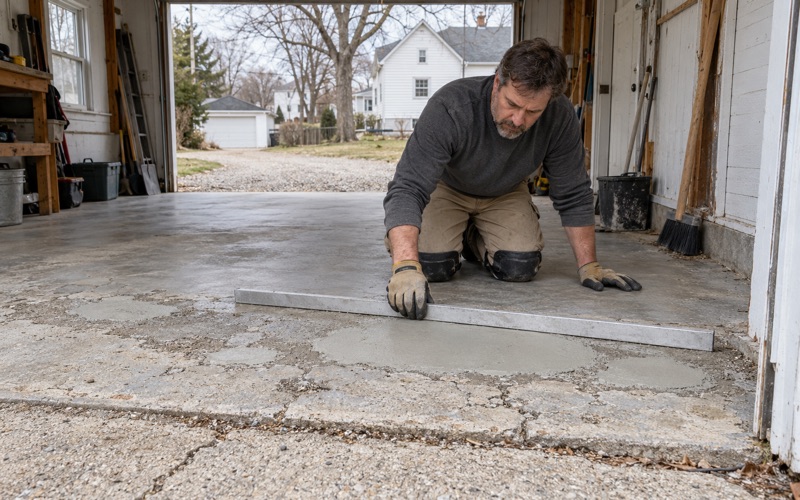
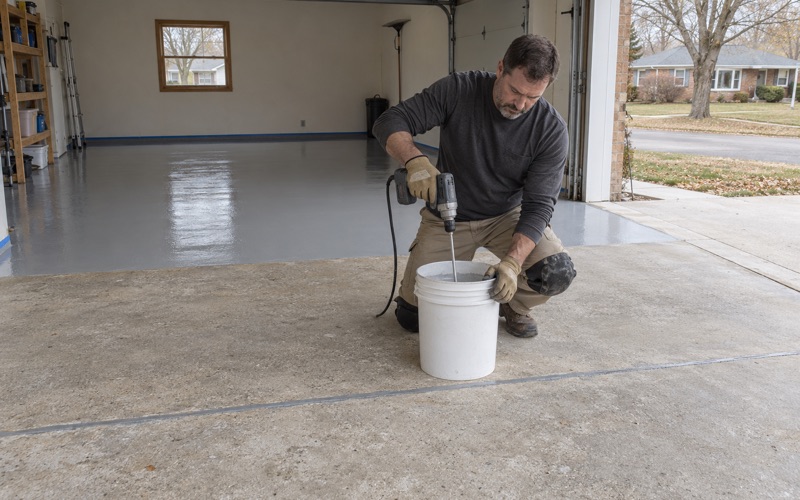
Two-part epoxy base coat mixed in a Janesville ranch garage, the back half of the ground slab already coated.

Epoxy Garage Floor

Epoxy garage floors in Janesville built on diamond-ground, moisture-tested concrete with a topcoat that stands up to road salt and hot tires.

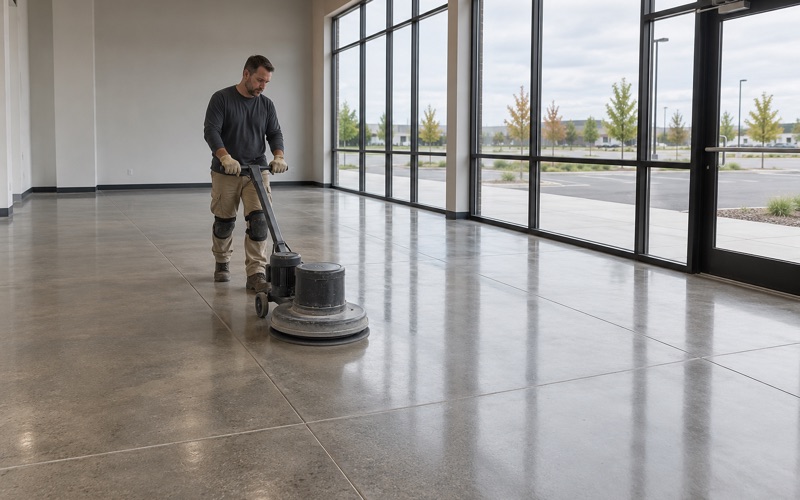
A high-speed burnisher bringing up the shine on a polished concrete floor in a new Janesville flex building.

Polished Concrete Floors

Polished concrete floors for Janesville shops, warehouses, storefronts and homes, ground, densified and polished to the look you pick.

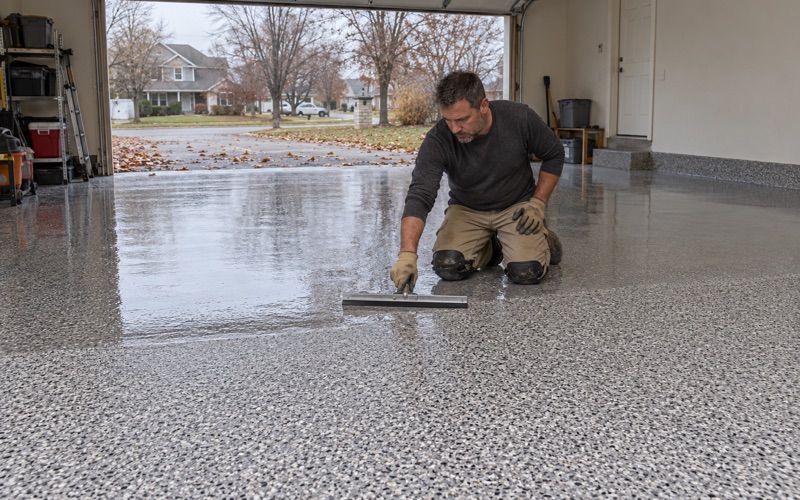
A clear polyaspartic topcoat pulled across a flake garage floor in Janesville on a cold late-autumn day.

Polyaspartic Floor Coating

Fast-curing, UV-stable polyaspartic floor coatings for Janesville garages, shops and commercial floors, installed over properly ground concrete.

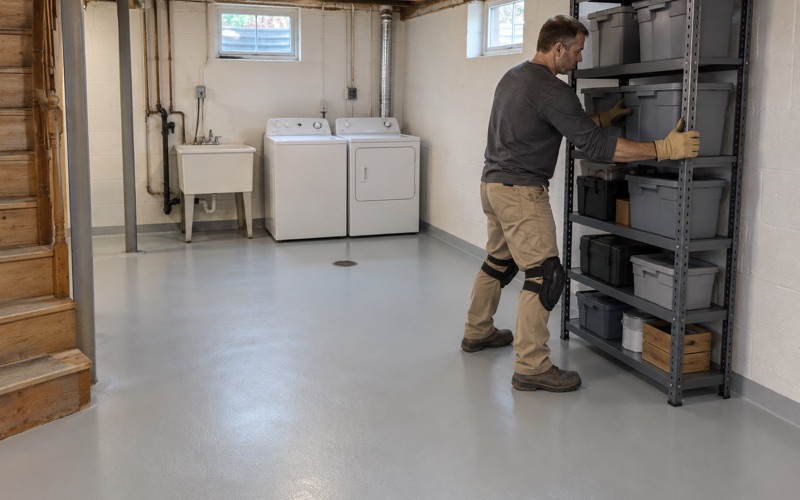
A light gray epoxy basement floor in a Janesville ranch, a steel shelving unit eased back into place on the finished coating.

Basement Floor Epoxy

Basement floor epoxy in Janesville that starts with moisture testing, so the coating is matched to what the slab can actually hold.

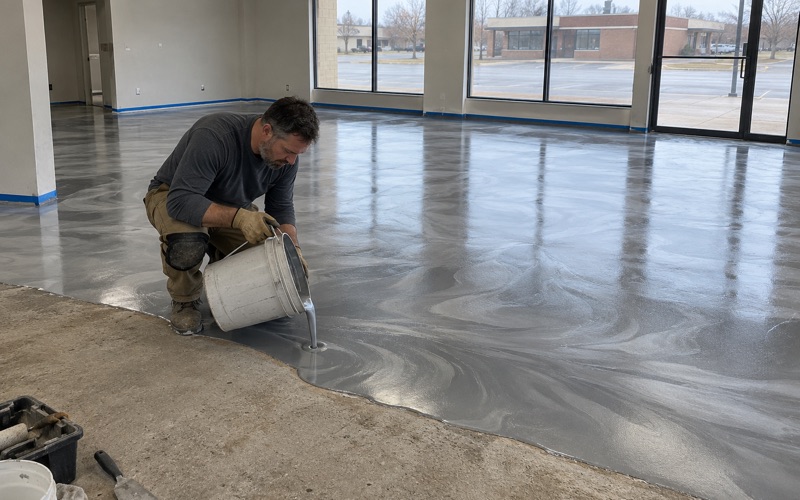
Pearl and charcoal metallic epoxy poured across the floor of a small Janesville showroom, pigment still moving.

Metallic Epoxy Floor

Marbled metallic epoxy floors for Janesville homes, showrooms and businesses, hand-worked over a flat, ground and moisture-tested slab.

Salt-pitted spalls at a Janesville garage door filled with repair mortar and checked flush before coating.

Concrete Floor Repair

Crack, spall, salt-scaling and joint repair for Janesville garage, basement and commercial concrete floors, with or without a coating.

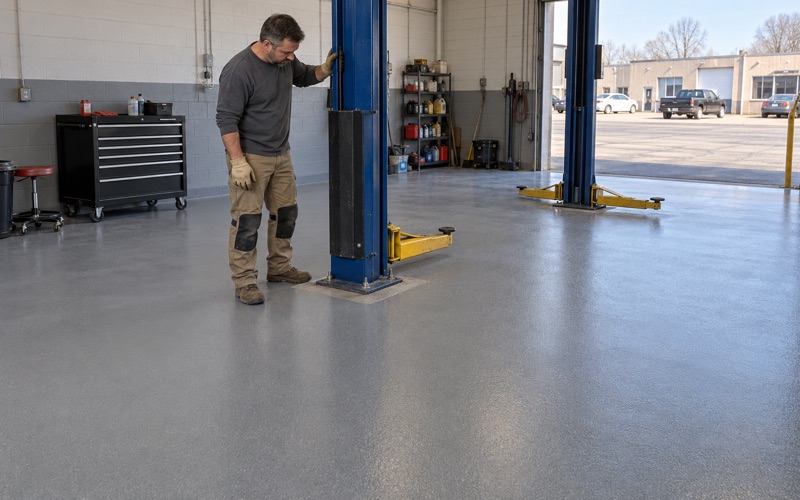
A coated service-bay floor around a two-post lift in a Janesville auto repair shop.

Commercial Epoxy Flooring

Commercial epoxy floors for Janesville storefronts, offices, clinics, schools and restrooms, phased around the hours your building stays open.

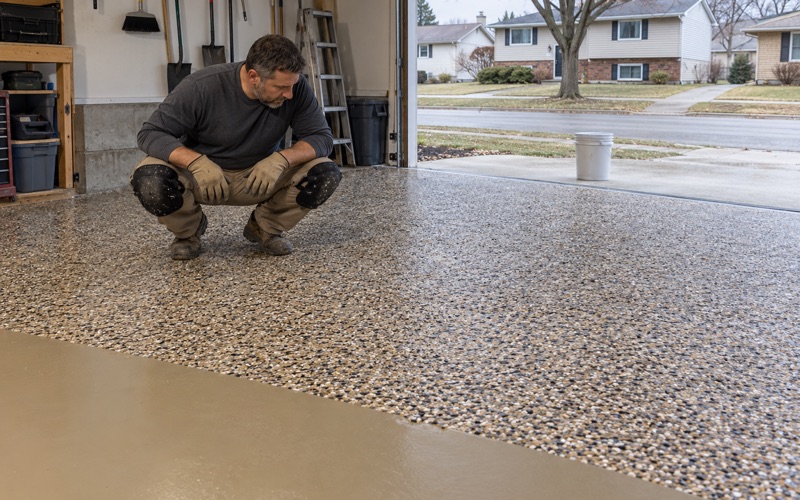
A dense flake broadcast checked at its working edge in the garage of a Janesville split-level.

Flake Epoxy Floor

Vinyl flake epoxy floors in custom color blends for Janesville garages, basements, shops and commercial spaces, finished with a hard topcoat.

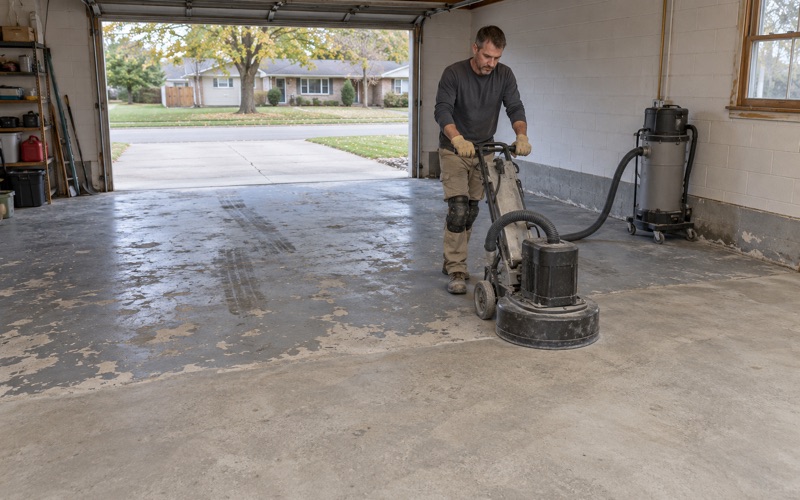
A walk-behind planetary grinder taking old peeling paint off a Janesville garage slab, half the floor already open.

Concrete Grinding

Diamond grinding and shot blasting for Janesville concrete floors, removing old coatings and opening the slab for a coating or new flooring.

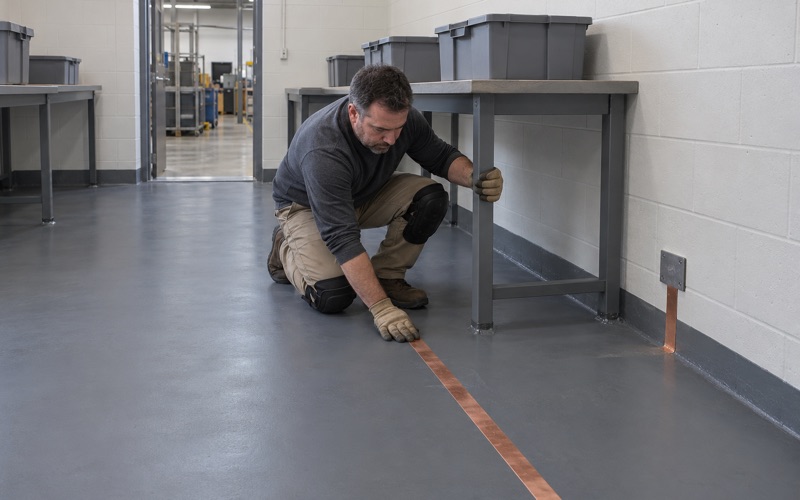
Copper grounding strip laid on a primed floor before the static-dissipative topcoat in a Janesville electronics room.

ESD Flooring

Static-dissipative and conductive ESD epoxy floors for Janesville electronics, lab and server spaces, grounded and resistance tested.

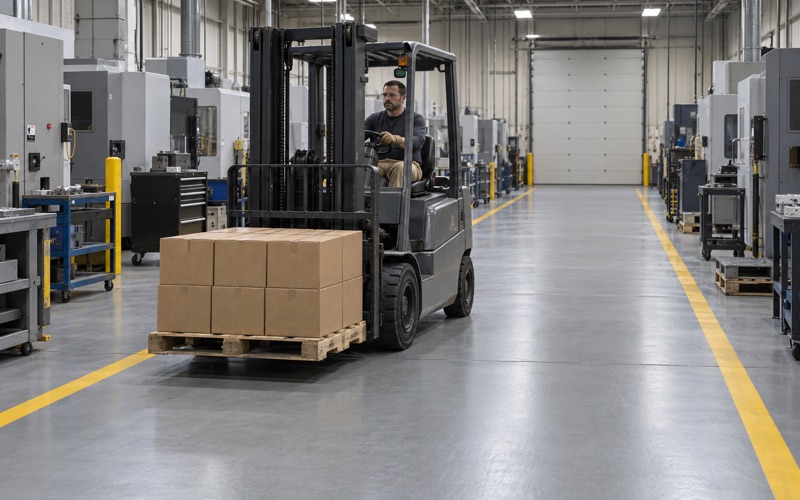
A forklift carrying a pallet onto a new heavy-duty coated floor in a Janesville manufacturing plant.

Industrial Epoxy Flooring

Heavy-duty industrial epoxy and urethane floors for Janesville plants, warehouses and food facilities, installed around your production schedule.

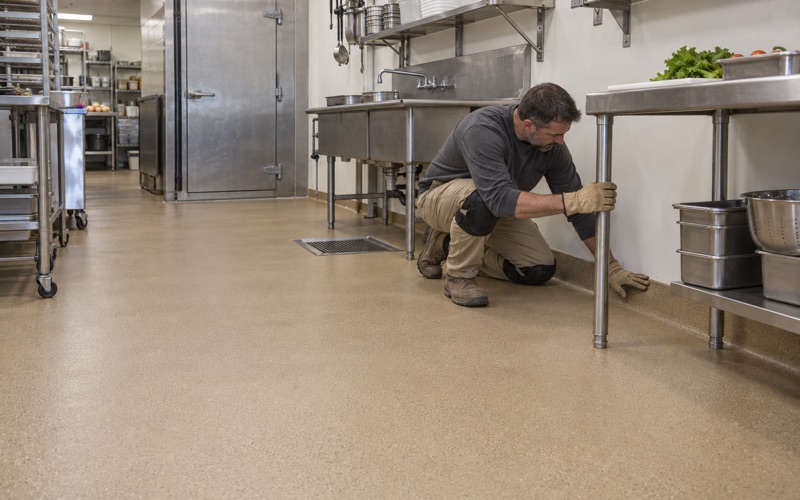
A urethane cement floor with an integral cove and a floor sink under the prep line in a Janesville restaurant kitchen.

Commercial Kitchen Flooring

Seamless, coved commercial kitchen floors for Janesville restaurants and food service, built for hot washdown, grease and health inspection.

Two Decades on Rock County Concrete

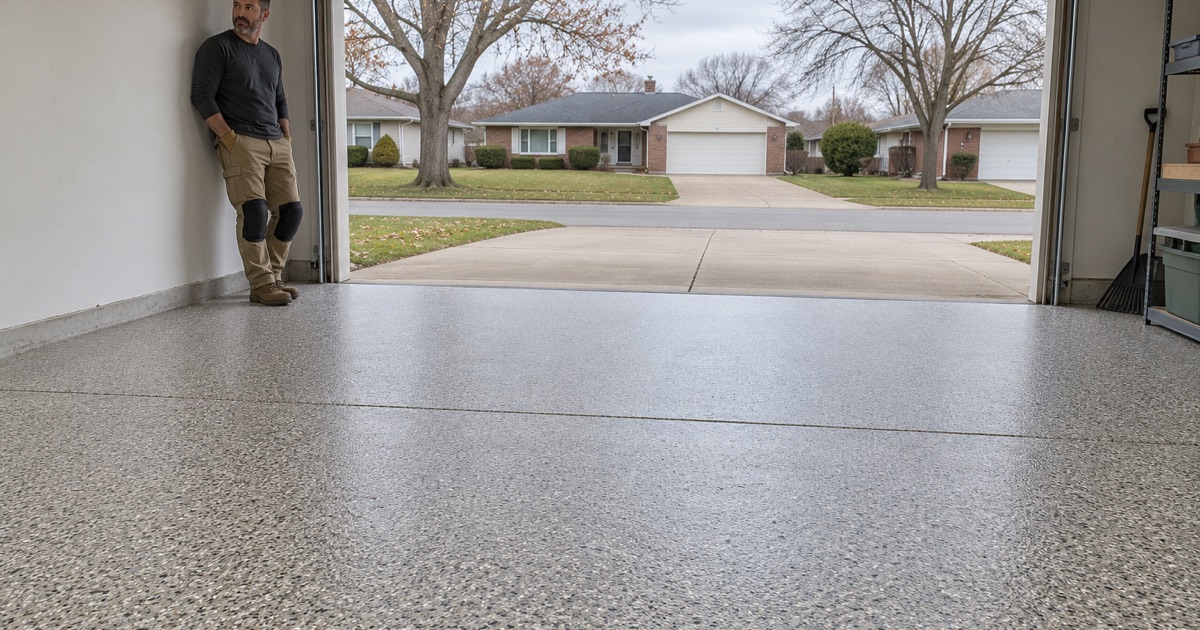
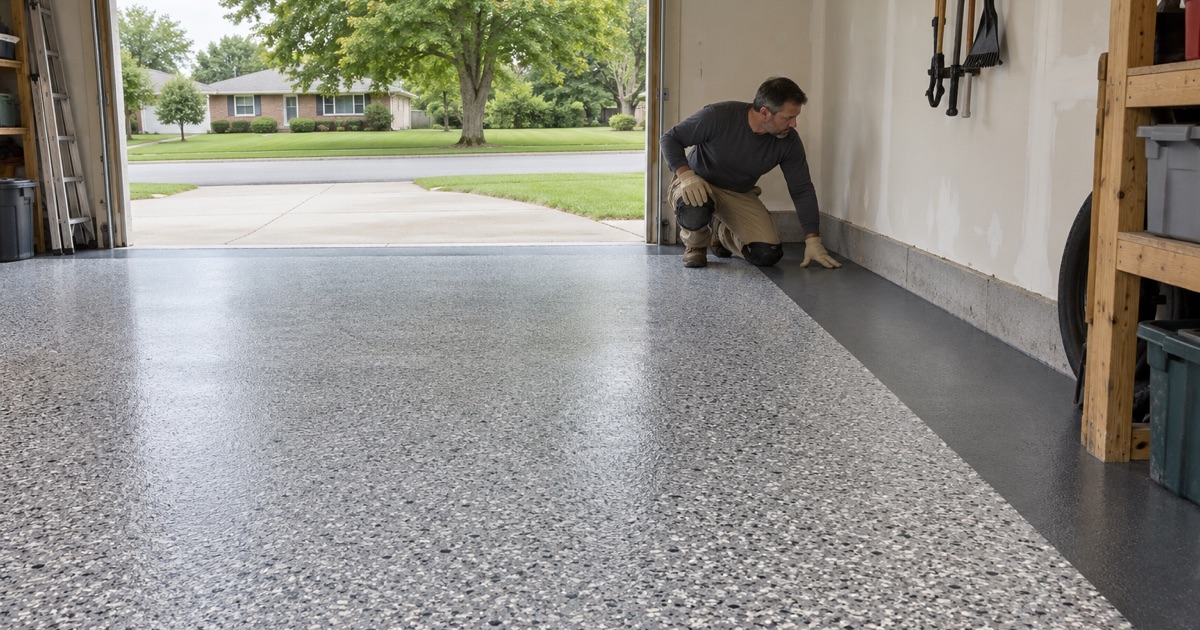
A finished flake floor in the attached garage of a 1960s Janesville ranch, the door raised to a quiet street of maples.

20+ Years of Epoxy Flooring Experience

We have been grinding, repairing and coating concrete floors for more than twenty years. That time has taught us how mid-century garage slabs, flood-prone basements and working plant floors behave once a coating goes down, and it shapes every recommendation we make before a job is sold.

Why Choose Janesville Epoxy Flooring

Ground Concrete, Never Acid

Every slab is opened with a diamond grinder or shot blaster to a measured ICRI surface profile, so the epoxy bonds into sound concrete rather than sitting on old sealer, laitance or the residue an acid etch leaves behind, which is how a cheap garage coating starts lifting at the tire lines.

Moisture Tested Before It Is Sold

No basement or garage floor is coated on a guess. Testing is a line item in the scope, because Wisconsin does not require a vapor retarder under an unconditioned attached garage slab, so a dry-looking floor is checked first rather than blistering a season later.

Salt-Ready Garage Systems

Garage floors here are built for the road salt and calcium chloride brine a Rock County winter carries in on the tires, with a broadcast and topcoat chosen to resist it, so the coating protects the concrete rather than wearing through at the parking spots by March.

Cured by Dew Point, Not Calendar

We schedule curing against slab temperature and the dew point spread at the surface. When an unheated Janesville garage is too cold to cure a coating properly, we say plainly that it has to wait for spring rather than laying a floor that never reaches full hardness.

A Contract Before Any Deposit

Every Wisconsin home job gets a written contract before money changes hands, as ATCP 110 requires, with the warranty exclusions read out first and moisture named at the top of the list, so nothing about the guarantee is a surprise after the floor is down.

The Garage Floor, Start to Finish

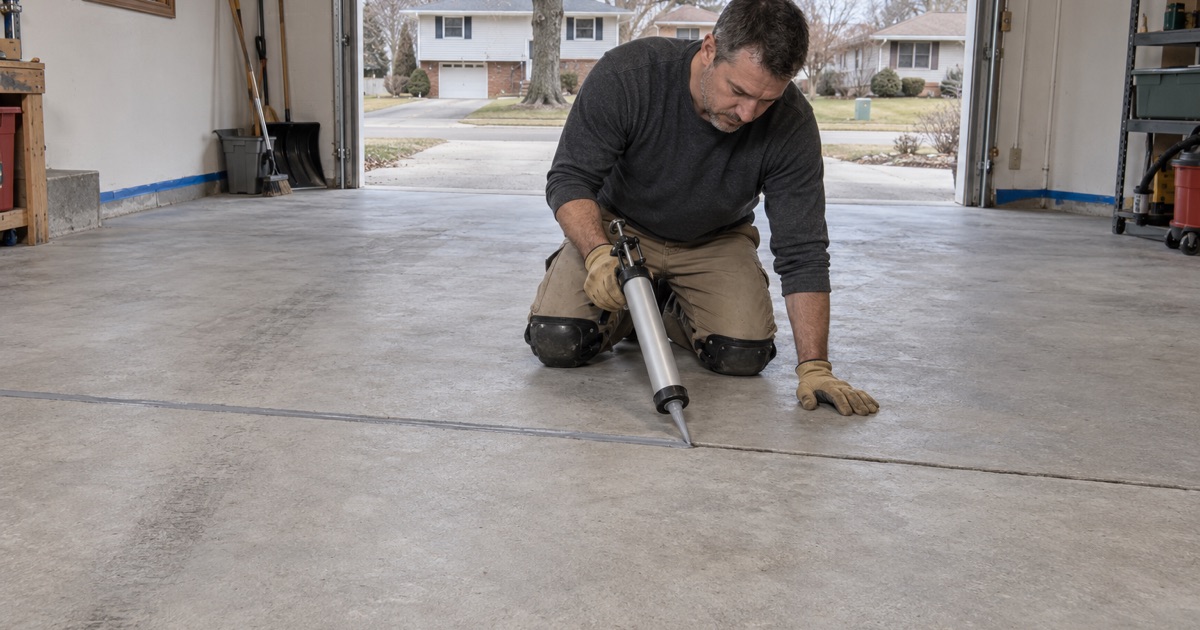
A saw-cut joint filled flush on a freshly ground Janesville garage slab, one of the steps before any coating goes down.

What an Epoxy Garage Floor Job Involves

It starts with a walk of the slab: cracks, spalls, old coatings and any sign of moisture. Then comes grinding, repair, a base coat, a broadcast if you want one, and a topcoat, followed by a cure period before you drive on it. We give you each step and the parking date in writing.

Grinding Garage Concrete Open

A coating over sealed, painted or troweled-smooth concrete has nothing to grip, and it lets go in sheets once hot tires work at it. We diamond grind or shot blast the whole garage floor to an open profile, vacuuming the dust as we go, so the base coat bonds to the slab itself.

Moisture Testing a Garage Slab

Wisconsin’s dwelling code exempts an unconditioned attached garage from the vapor retarder required under other new slabs, under SPS 322.38. That means many garage floors have nothing below them to stop ground moisture, so we test with a plastic sheet or calcium chloride kit before choosing a primer.

What the Dwelling Code Asks of a Garage Floor

Under SPS 321.203, a garage floor has to be concrete or another noncombustible material that resists petroleum products and slopes to the door, to grade or to a drain. The code says nothing about sealing or coating it, so a coating is your choice, and we keep the slope working when we build one.

Coating Versus Replacing a Garage Slab

A slab that has heaved, settled badly or broken into loose pieces is a replacement job, not a coating job. Replacing a slab can be a permit question where a coating may not be, so we ask the city building inspector before anything is scheduled.

Road Salt and Calcium Chloride Damage

Deicers carried in on the tires soak into bare concrete, and repeated freezing works that brine against the surface until it scales and pits. A sealed, coated floor keeps that brine on top where it can be squeegeed off instead of inside the slab.

Coating a Garage in a Janesville Winter

The Afton and Janesville station normals show about 148 nights a year at or below 32 degrees, with a median last spring freeze in late April. Epoxy cures slowly in a cold slab, so an unheated garage often has to wait until the concrete warms rather than being coated in January.

Bubbles, Pinholes and Outgassing

Concrete holds air, and as a slab warms that air rises through a fresh coat, leaving bubbles and pinholes. We time coats to a falling slab temperature where we can and use a primer coat to seal the pores before the build coat goes down.

Epoxy Garage Floor Kits

A store-bought kit is usually a thin, water-based epoxy over an acid-etched floor, and it rarely survives hot tire pickup. A professional job uses ground concrete, a 100% solids epoxy at a measured thickness and a durable topcoat, which is the difference you are paying for.

What an Epoxy Garage Floor Costs

The price follows the square footage, the slab’s condition and the system you choose. Crack repair, removing an old coating, a moisture-mitigation primer, or a full flake broadcast all move the number, and our proposal lists each one so you can see why.

What a Coating Warranty Usually Excludes

Most floor coating warranties exclude failures caused by moisture coming up through the slab, and that exclusion matters more than the warranty’s length. We read every exclusion before the job is sold, starting with moisture, so you know exactly what is and is not covered.

Basements and the Water Under Them

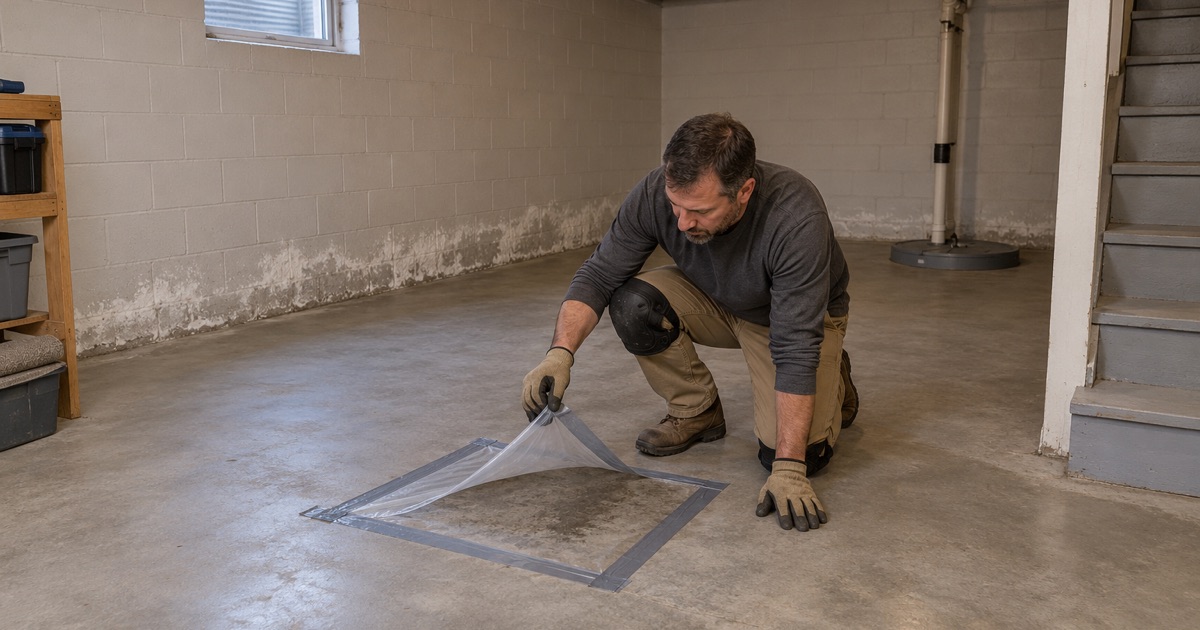
A taped plastic sheet test on a bare Janesville basement floor, white efflorescence along the base of the block wall behind it.

Coating a Basement Floor

A basement slab sits in the ground, so moisture is the first question, not the color chart. We test before we quote a system, and we choose between a standard 100% solids epoxy and a moisture-mitigation primer based on what the readings show rather than how the floor looks.

Why a Basement Slab Sweats in Summer

Warm, humid summer air meets a cool basement slab and condenses on the surface, leaving the floor damp even when no water is coming up from below. We check the dew point before we coat so that condensation is not trapped under the epoxy.

Hydrostatic Pressure Under a Basement Slab

When groundwater rises, it pushes up against the underside of the slab with real force. A floor can look dry and still have enough pressure behind it to lift a coating, which is why an ASTM F2170 relative humidity probe tells us more than a glance ever could.

Efflorescence on a Basement Floor

That white powder is mineral salt left behind as water moves through the concrete and evaporates. It tells us moisture is moving, so we treat it as a warning, remove it by grinding and test before deciding whether the floor can take a coating at all.

Sump Pits, Drains and Floor Edges

The edges around a sump pit, a floor drain and the walls are where water shows up first and coatings fail first. We detail those transitions carefully and keep drains and the sump working rather than sealing over them for a cleaner look.

Coating After a Rock River Flood

The Rock River crested at a provisional 12.11 feet at the Afton gauge on April 18, 2026, and the spring storms left basements around the city holding water. A flooded slab is dried and moisture tested before anything is applied, and we never sell a coating as flood protection.

Finished Basements, Playrooms and Home Gyms

A coated slab makes a durable, washable floor for a playroom, workshop or home gym. We can build a smoother finish for bare feet, a textured one for a gym, or a coating designed to sit under rugs, after the moisture readings confirm the slab can hold it.

Radon and Floor Coatings

Rock County is in EPA radon Zone 1, the highest potential category. A floor coating is not radon mitigation, and we never sell one that way. If you are concerned about radon, test the home and talk to a mitigation specialist; we can coat around a mitigation system afterward.

Color, Flake and Finish

A crisp border between a solid charcoal band and a gray flake field on a newly finished Janesville garage floor.

Vinyl Flake Epoxy Floors

A vinyl flake broadcast hides dust and small imperfections and adds texture underfoot. Blend color and chip size change the look dramatically, from a tight speckle to a bold full broadcast, and we show you samples before you commit to one.

Metallic Epoxy Floors

Metallic pigments in a clear epoxy create a marbled, three-dimensional finish that no two floors share. It takes a flat, well-prepared slab, careful mixing and hand work while the resin flows, so we plan the layout and the lighting with you first.

Polished Concrete Floors

Polished concrete is ground in stages with progressively finer diamonds and hardened with a lithium silicate densifier. How deep we grind decides how much aggregate shows, from a cream finish to full exposure, and that choice should be made before the first pass.

Gloss, Satin and Matte Topcoats

High gloss shows dust, footprints and tire marks more than a satin or matte topcoat does. We help you pick a sheen that suits how the room is used, since a glossy showroom floor and a working garage want different finishes.

Quartz Broadcast Floors

Colored quartz aggregate broadcast into the coating gives a floor both color and grip in one step. It is a strong choice for commercial restrooms, locker rooms and wet entryways, where slip resistance has to be built in rather than added later.

Solid Color Coatings

Sometimes a single solid color is the right answer, for a shop floor, a utility room or a commercial space that needs clean lines and easy cleaning. It still gets the same grinding, moisture check and topcoat as a decorative system.

Ultraviolet Light and Ambering

Epoxy yellows, or ambers, under sunlight coming through a garage door or window. A polyaspartic or polyurea topcoat resists ultraviolet light far better, which is why we usually specify one over the epoxy base where the floor sees daylight.

Saw-Cut Lines, Borders and Logos

Saw-cut patterns, contrasting borders and inlaid logos turn a floor into a design feature for a showroom or entry. We lay them out on the ground slab before coating, so the lines are crisp and the joints still do their job.

Plants, Kitchens, Shops and Farm Floors

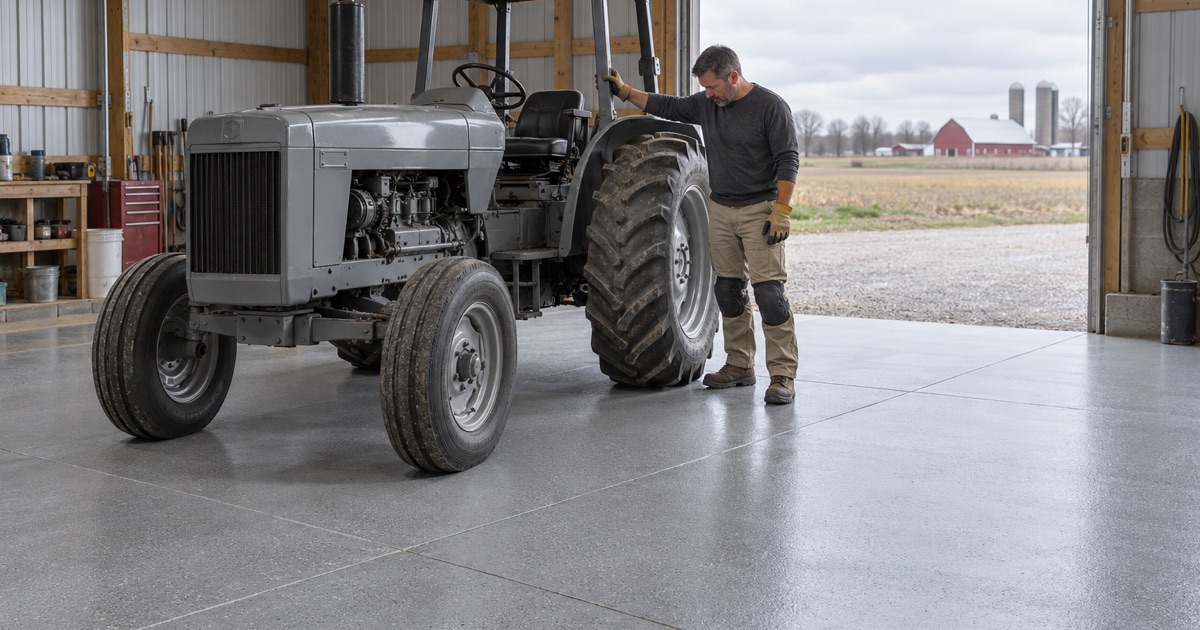
A coated concrete floor inside a farm machine shed near Janesville, a plain tractor parked on it.

Commercial Versus Residential Floor Work

A commercial floor carries more weight, more chemicals and a tighter schedule than a garage. We scope it around the actual traffic, cleaning routine and downtime available, and commercial alterations in the city go through plan review under the 2021 International Building Code as Wisconsin adopted it.

Manufacturing and Assembly Floors

Oil, coolant and anchored machinery are hard on a coating. We prepare around machine bases, choose a chemical-resistant system for the fluids in use, and build thickness where carts and dropped parts will hit hardest.

Filling Slab Joints Before Forklifts Cross

Plant, shop and warehouse joints are filled with a semirigid joint filler before any coating goes over them. That supports the edges so forklift and cart wheels do not chip them away and break the coating along every joint line.

Food and Beverage Plant Floors

Wisconsin’s food processing plant rules call for floors that can be kept clean and drain properly. We build seamless, cleanable systems for processing rooms and confirm what the plant’s own inspector expects before choosing the coating.

Restaurant Kitchen Floors and Coving

Restaurant kitchens in Janesville are inspected by the Rock County Public Health Department under the Wisconsin Food Code. We plan around that inspection, including coved floor and wall junctures where FDA Food Code section 6-201.13 calls for them, and ask the department before recoating a licensed kitchen.

Warehouse and Distribution Center Floors

Forklift traffic grinds a weak coating away in the aisles first. We use a thicker, abrasion-resistant build in the traffic lanes, keep line striping legible, and fill joints so the wheels roll across them without breaking the edges.

Urethane Cement Floors

Hot washdown and thermal shock will take a standard epoxy off a kitchen or processing floor. Urethane cement handles hot water, steam cleaning and harsh chemicals, so we specify it where temperature swings would break a conventional coating.

Hospital, Clinic and Campus Floors

Healthcare and school buildings cannot close for long. We phase work in sections, use fast-curing systems where they make sense and plan around the hours each space must stay open.

Farm Shops and Machine Sheds

Tractors bring in mud, manure and fertilizer on their tires, and all of it attacks bare concrete. A textured, chemical-resistant coating keeps a farm shop floor cleanable and safer underfoot when it is wet.

Static-Dissipative and ESD Floors

Electronics and sensitive equipment rooms need a floor that drains static charge within a specific resistance range. We install static-dissipative and ESD systems with grounding points and test the finished floor so it performs as specified.

Wisconsin and Illinois VOC Rules

Wisconsin follows the federal 40 CFR 59 Subpart D rule, which binds the coating manufacturer. Illinois sets its own architectural coating VOC limits under 35 Ill. Adm. Code Part 223, and those bind the applicator too, so we choose compliant products for every Illinois job.

Overnight and Weekend Floor Work

Plant, kitchen and shop floors are scheduled around the hours the building has to keep running. We work overnight and on weekends where needed and stage the job so production, service or deliveries keep moving.

Grinding dust and slurry are collected on site and never washed toward a street drain or the Rock River. Whether the floor is a garage, a basement or a plant, the result is a coating built on prepared concrete with every step written down before the work begins.

Areas We Serve

Janesville Epoxy Flooring provides epoxy-flooring throughout the greater Janesville area, with the same crews and the same standards on every job.

Good to know

Frequently Asked Questions

How long does an epoxy garage floor take from start to finish?

A typical two-car garage is a two- to three-day job: grinding, crack and joint repair, and the base coat on the first day, then broadcast, topcoat and cure. Light foot traffic usually comes back within a day of the last coat, and we give you the vehicle date in writing because it depends on the product and the slab temperature.

Do you acid etch concrete before coating it?

No. Every slab we coat is opened with a diamond grinder or a shot blaster to a measured surface profile. Acid etching leaves an uneven profile and residue that can weaken the bond, and it does nothing to remove old sealers, which is one of the most common reasons a garage coating lets go.

What drives the price of an epoxy floor?

Square footage, the condition of the slab, and the system you choose. Crack repair, old coating removal, a moisture-mitigation primer and a thicker build all add cost, while a clean, sound slab with a straightforward flake system keeps it down. Our proposal itemizes each of those so you can see where the number comes from.

Is polyaspartic better than epoxy?

They do different jobs. A 100% solids epoxy base builds thickness and bonds hard to ground concrete, while a polyaspartic or polyurea topcoat resists ultraviolet ambering, cures fast and handles a wider temperature window. Many of our garage systems use both, and we explain why in the proposal rather than selling one as a cure-all.

Can you coat a basement floor that has had water on it?

Sometimes, but only after the slab has dried and been tested. We use calcium chloride and in-situ relative humidity testing to see how much moisture is still moving through the concrete. If the numbers are too high, a moisture-mitigation primer or no coating at all may be the honest answer, and we will say which.

Do I need a permit for an epoxy floor?

Coating an existing floor and replacing a slab are different questions, and the answer can vary by city or village. We ask the local building inspector before a job is scheduled, so you are not left guessing and the work is not held up later by an inspection nobody planned for.

What does your written contract cover?

Every Wisconsin home job gets a written contract before any deposit, as the state's home improvement rule requires, and Illinois jobs over $1,000 also get the consumer rights pamphlet that state calls for. The contract names the product, the system build, the finished thickness, the schedule and the warranty exclusions.

How soon can a commercial floor go back into service?

It depends on the system. A fast-cure polyaspartic or certain urethane cement systems can return to traffic far sooner than a standard epoxy, and we often phase a plant or kitchen floor in sections. We plan the work around overnight and weekend windows so the building can keep running.

Will an epoxy floor be slippery when wet?

A smooth high-gloss coat can be. That is why we build slip resistance into the system itself, with flake or quartz aggregate broadcast into the coating or an anti-slip additive in the topcoat, and we match the texture to how the floor is actually used rather than one finish everywhere.

Do you work in Illinois as well as Wisconsin?

Yes. On Illinois jobs we use coatings that meet that state's architectural coating VOC limits, which bind the applicator as well as the manufacturer, and we follow the Illinois written-contract and pamphlet requirement on every home job over $1,000.

Ready to Get Started?

Request a free quote today and we'll get back to you fast.