Janesville Epoxy Flooring installs flake epoxy floors in Janesville, WI, serving surrounding cities including Milton, Edgerton, Beloit, South Beloit and Evansville. A flake floor is a coating system with colored vinyl chips broadcast into the wet base coat and locked under a clear topcoat, and it is the most requested finish we install. In more than 20 years, we have found few systems that balance looks, texture and everyday practicality so well.
Flake hides the dust, tire marks and salt film that show on smoother finishes, adds subtle grip underfoot and comes in a range of blends from muted grays to bold multicolor mixes. It also builds thickness, which helps the floor stand up to wear. None of that matters, though, if the slab underneath is not prepared to hold it.
So every flake floor starts with diamond grinding, crack repair and moisture testing written into the scope. The proposal names the base coat, the flake blend and size, the topcoat and the finished thickness, so you can compare what was quoted with what went down. Here is how a flake floor is built and how to choose one.
How a Flake Epoxy Floor Is Built
Preparing the Slab
We open every slab with a diamond grinder or shot blaster to a measured ICRI profile, removing old sealers, paint and the smooth troweled surface that coatings cannot grip. We do not acid etch. Cracks and spalls are filled and ground flush, and joints are either filled or honored depending on the slab.
Moisture testing comes next, especially in basements and in garages without a vapor retarder below the slab. If readings run high, a moisture-mitigation primer goes down before the base coat.
Base Coat and Broadcast
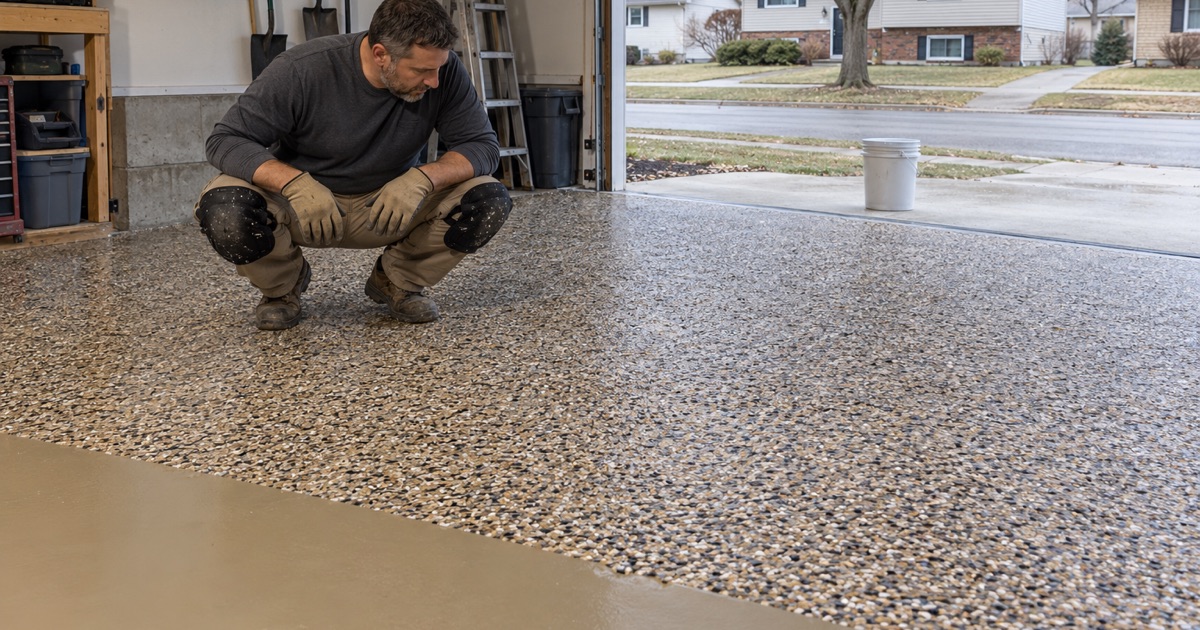
A pigmented 100% solids epoxy base coat is rolled out at a measured thickness, usually in a color that complements the flake blend. While it is still wet, we broadcast vinyl flakes across the surface by hand, working in sections so the base coat stays tacky enough to grab them. Even coverage takes practice, especially near walls and doors.
The base coat color shows through in a partial broadcast and disappears under a full one. We choose it together with the blend so the floor reads the way you expect.
Scraping and Topcoating
Once the base coat cures, we scrape the floor to knock off loose and standing flakes and vacuum it clean. That step smooths the surface so the topcoat can lock the chips down evenly. Skipping it leaves sharp edges and a rough, uneven finish.
A clear polyaspartic or urethane topcoat finishes the system, sealing the flakes and taking the wear. Polyaspartic resists ultraviolet ambering, chemicals and hot tire pickup, which is why we use it on most garage and daylight-exposed floors.
Choosing Flake Blend, Size and Coverage
Partial Versus Full Broadcast
A partial broadcast scatters flakes over the base coat, leaving solid color visible between them for a lighter, speckled look. A full broadcast adds flakes until the base coat can take no more, creating a floor that reads entirely as flake. Full coverage adds body, texture and hiding power.
Most working garages and commercial floors use a full broadcast for its durability and ability to hide wear. Partial broadcasts suit lighter-use rooms where you want more of the base color to show.
Chip Size and Pattern
Flake comes in several sizes, and size changes the look as much as color does. Small chips give a fine, granite-like speckle, medium chips are a versatile middle ground, and large chips give a bold, varied pattern. Larger chips also do a better job hiding minor slab imperfections.
We bring physical samples to your site, since chips look different on a screen than on concrete under your own lights. Seeing a sample board on your floor is the best way to choose.
Color Blends That Hide Everyday Wear
Multicolor blends with a mix of light, medium and dark chips are the best at hiding dust, tire marks and the gray film road salt brine leaves behind. Solid-tone or very light blends look crisp but show dirt sooner. Darker blends hide stains but can show dust and salt residue more.
We ask how the space is used, how often it gets cleaned and what look you want, then suggest blends that fit. Many homeowners choose a blend that complements the house siding or interior trim.
Texture and Slip Resistance
A flake floor’s texture depends on the broadcast density and how much topcoat goes over it. A full broadcast with a single topcoat leaves a slightly textured surface with good grip, while a thicker topcoat makes it smoother and easier to mop. A fine anti-slip additive can be mixed in where extra traction is needed.
We balance texture against cleaning. A garage that sees winter meltwater benefits from more grip, while a basement playroom may be better smoother.
Where Flake Floors Work Best
Garages and Basements
Flake is our most common garage finish because it hides wear and adds grip while standing up to the road salt and calcium chloride brine a Rock County winter brings in. In basements, it creates a durable, cleanable floor for laundry rooms, workshops, storage and play areas once moisture readings confirm the slab can hold a coating.
Every Wisconsin home job gets a written contract before any deposit, and Illinois home jobs over $1,000 also receive that state’s consumer rights pamphlet. Curing is scheduled against slab temperature and dew point, so an unheated garage may need to wait for warmer weather.
Commercial and Light Industrial Spaces
Flake systems work well in break rooms, locker rooms, retail back rooms, vet clinics, auto service bays and light manufacturing spaces. They clean easily, hide scuffs and can be built in company colors. A harder topcoat and extra texture suit busy commercial floors.
We schedule commercial flake installations around operating hours, including evenings and weekends, and fill joints with a semirigid filler where carts and pallet jacks cross. Products are chosen to meet the VOC rules for the state the job is in.
- 20+ Years in Concrete Coatings
- Moisture Testing in Every Scope
- Free Written Estimates